The question
A coalition is only as strong as its members' ability to take part. The Leadership Conference wanted to understand what members valued, what got in their way, and what one change would bring them closer.
I coded 83 member survey responses in Dovetail and ran two focus groups, synthesized in Mural. Overall sentiment was positive: 70% of coded sentiments.
What members asked for
Members valued convening above all. Their most common request was simply knowing who to talk to.
The top "if I could change one thing": more frequent engagement with the coalition, named 19 times.
Next came being more inclusive of marginal issues (6) and transparency into task forces and contacts (4).
Four personas
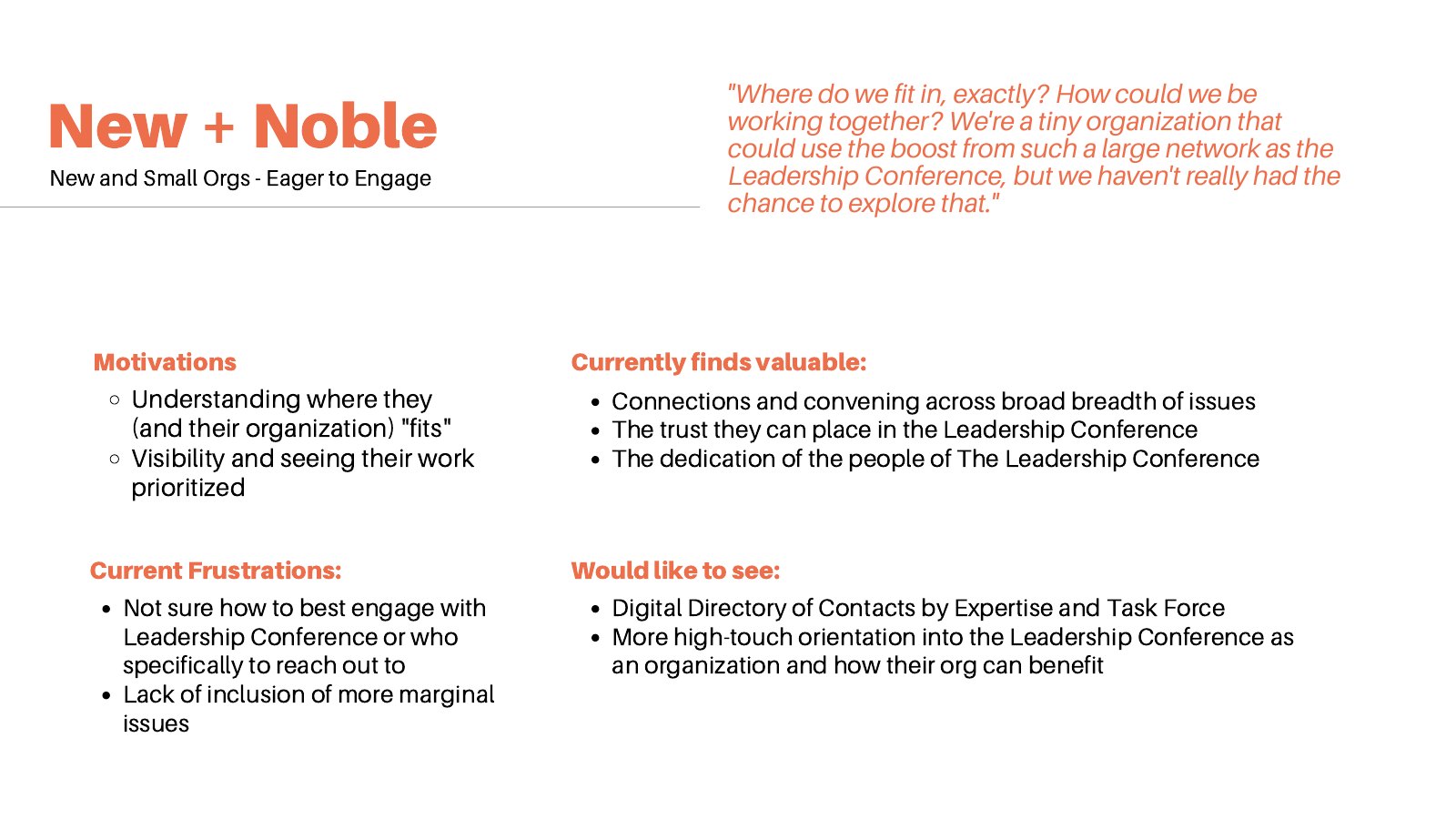
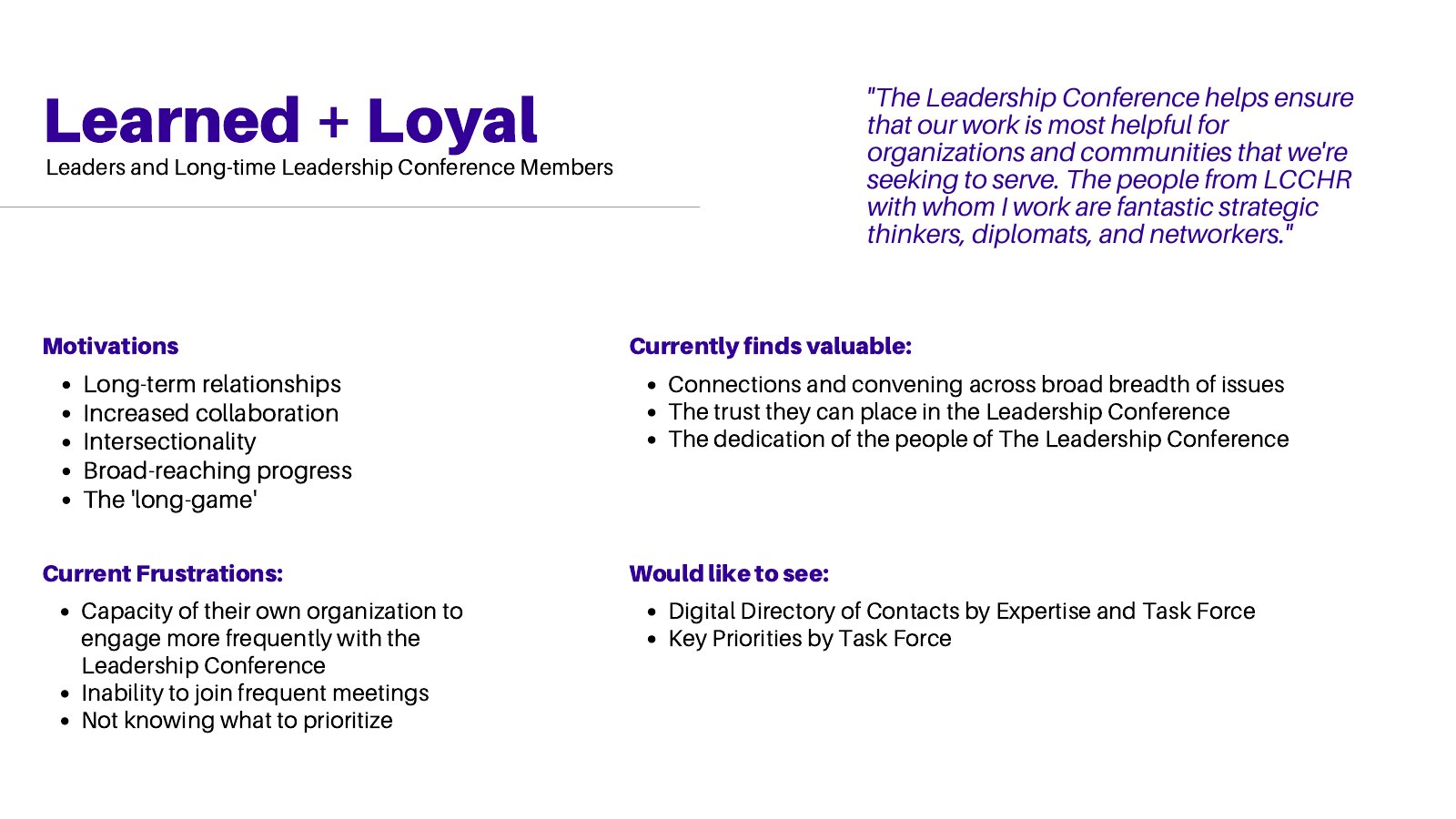
The personas separate long-standing members from new, small organizations still looking for their place, and include the coalition's own field and government affairs staff, so internal and external needs sit side by side.
Learned + Loyal
Long-time member leaders who value trust and convening, but lack the capacity to engage as often as they'd like.
New + Noble
New and small organizations asking "where do we fit?" and wanting a high-touch orientation.
Field + Membership
Internal staff who need state-level data and a way to track relationships and progress.
Campaign + Government Affairs
Internal staff balancing staff turnover with the need for clearer insight into member capacity.
From personas to ideas
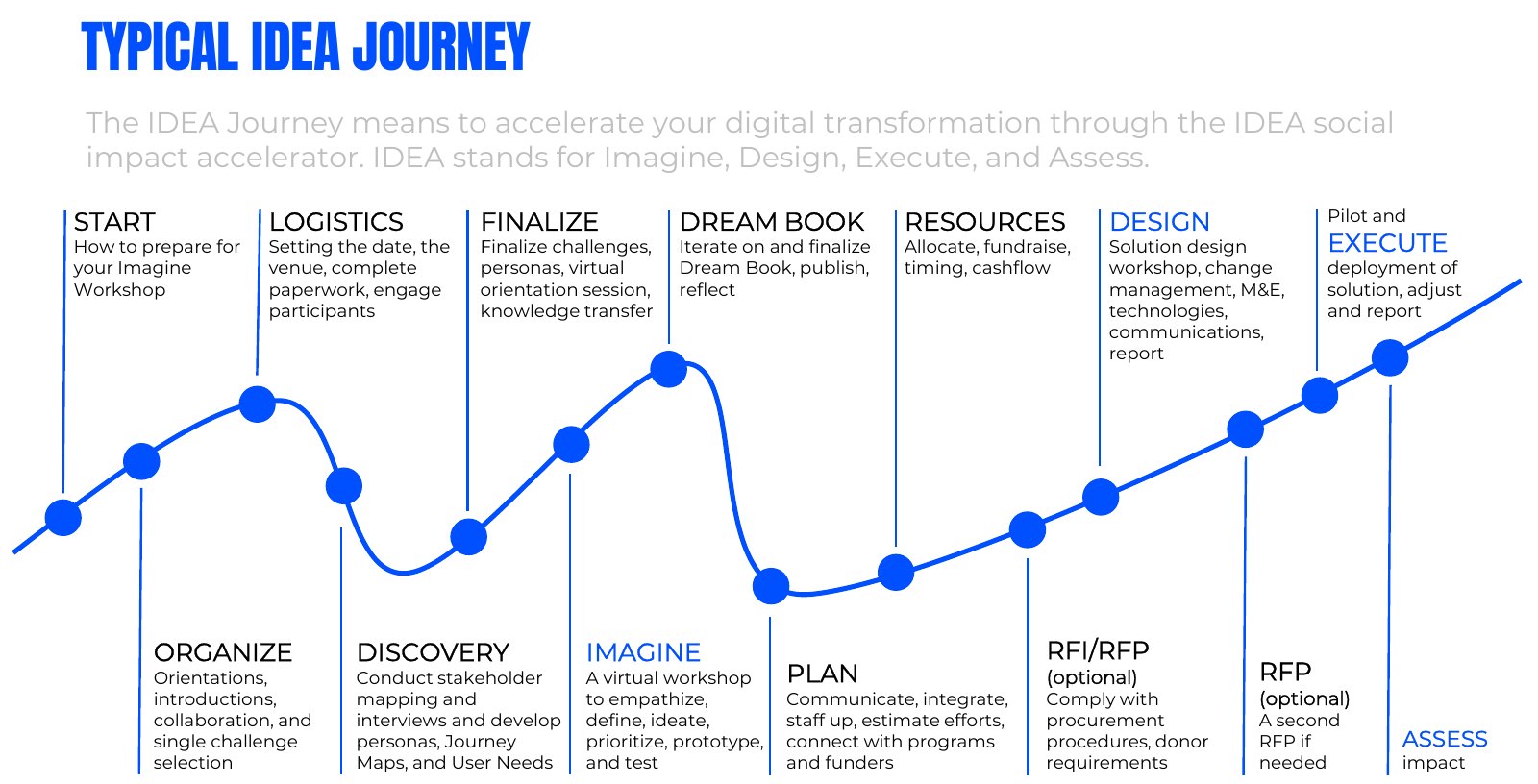
The survey, focus groups and personas were the discovery phase of an IDEA Journey, Wipfli's innovation process that moves from Imagine to Design, Execute and Assess. I then facilitated the Imagine workshop, where The Leadership Conference team used the personas to generate, group and prioritize ideas for serving members better.
Why it matters
The personas gave staff a shared, evidence-based picture of who they serve. They pointed to concrete next steps: a member directory, task force priorities in one place, and an orientation for new organizations.