The problem
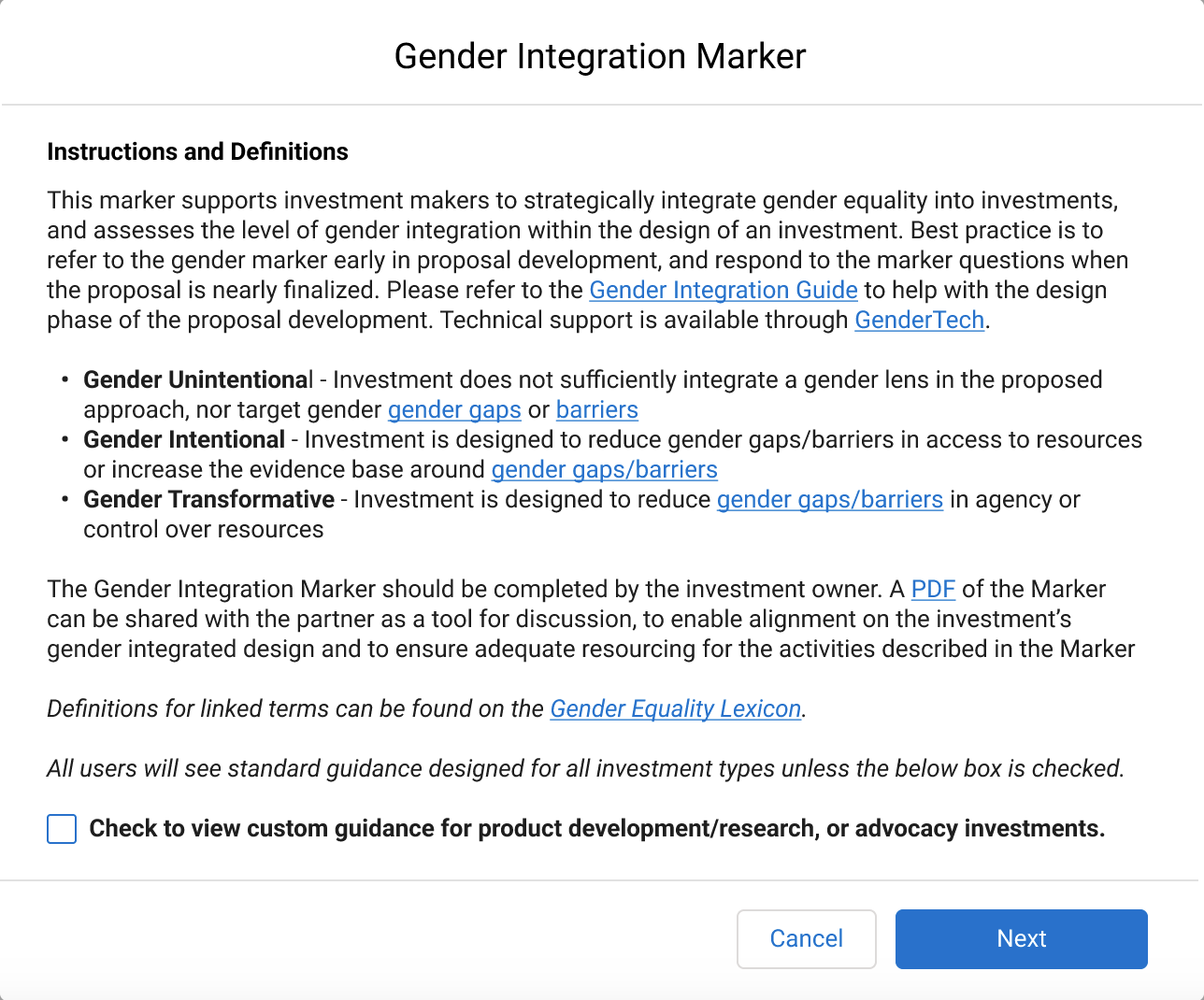
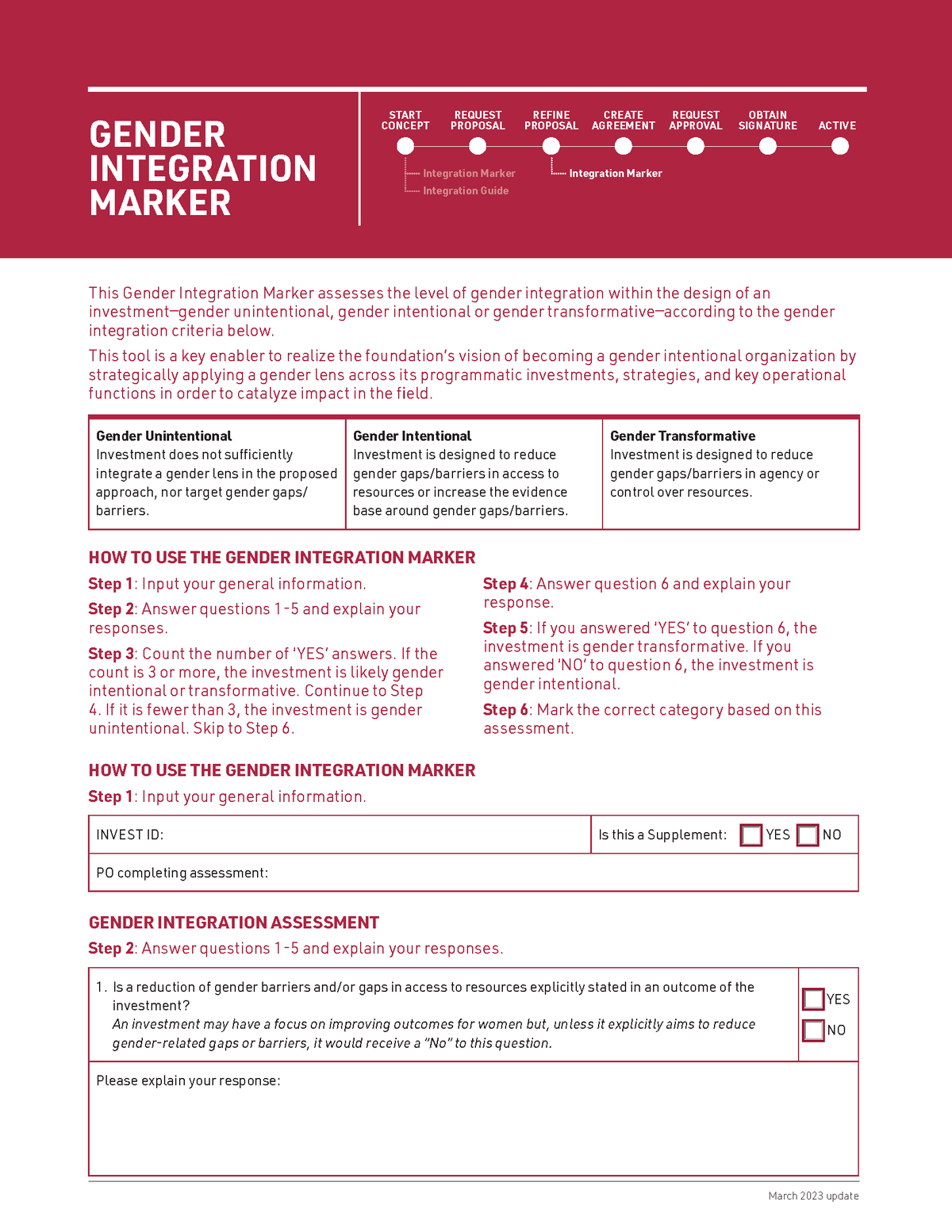
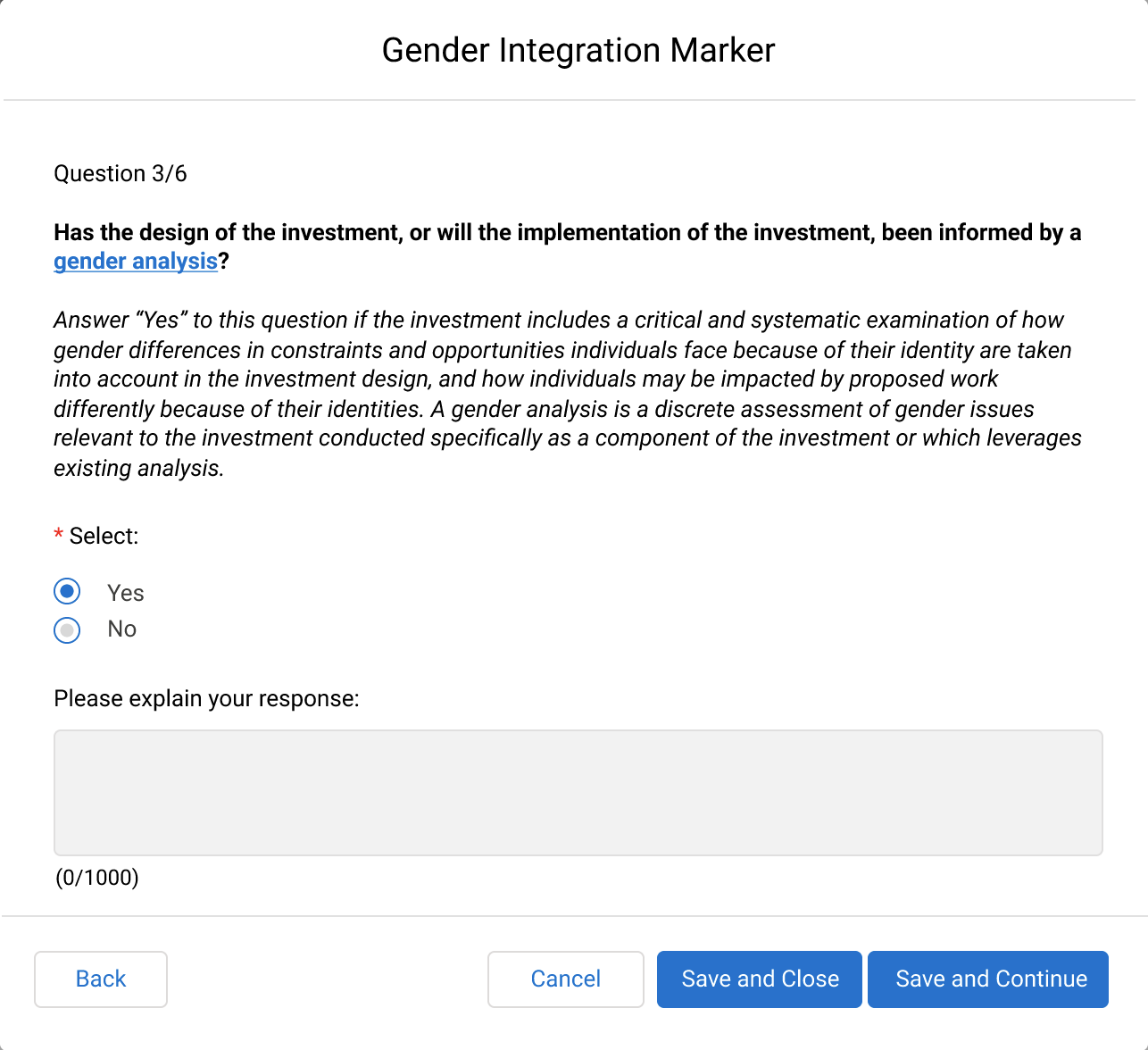
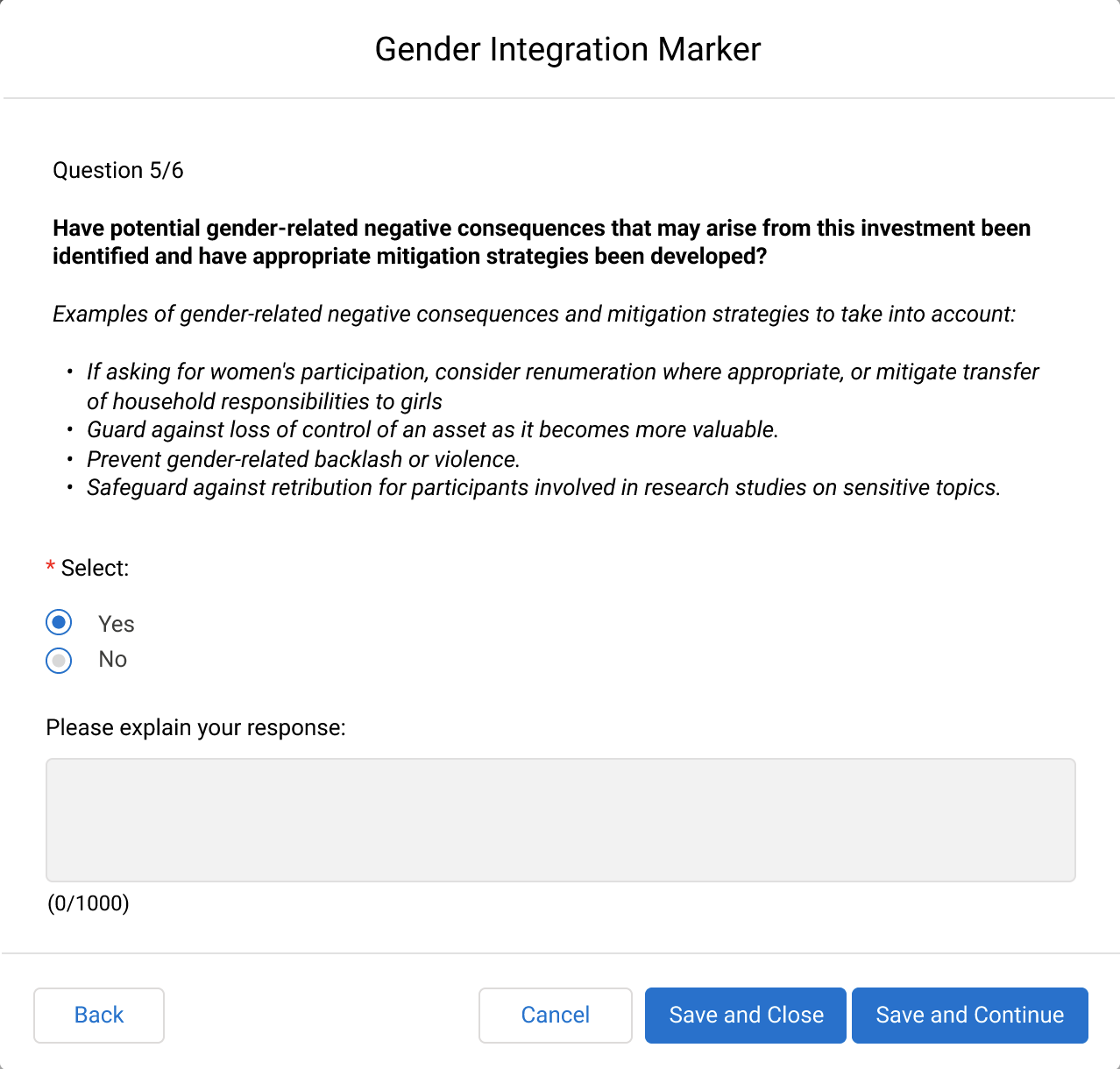
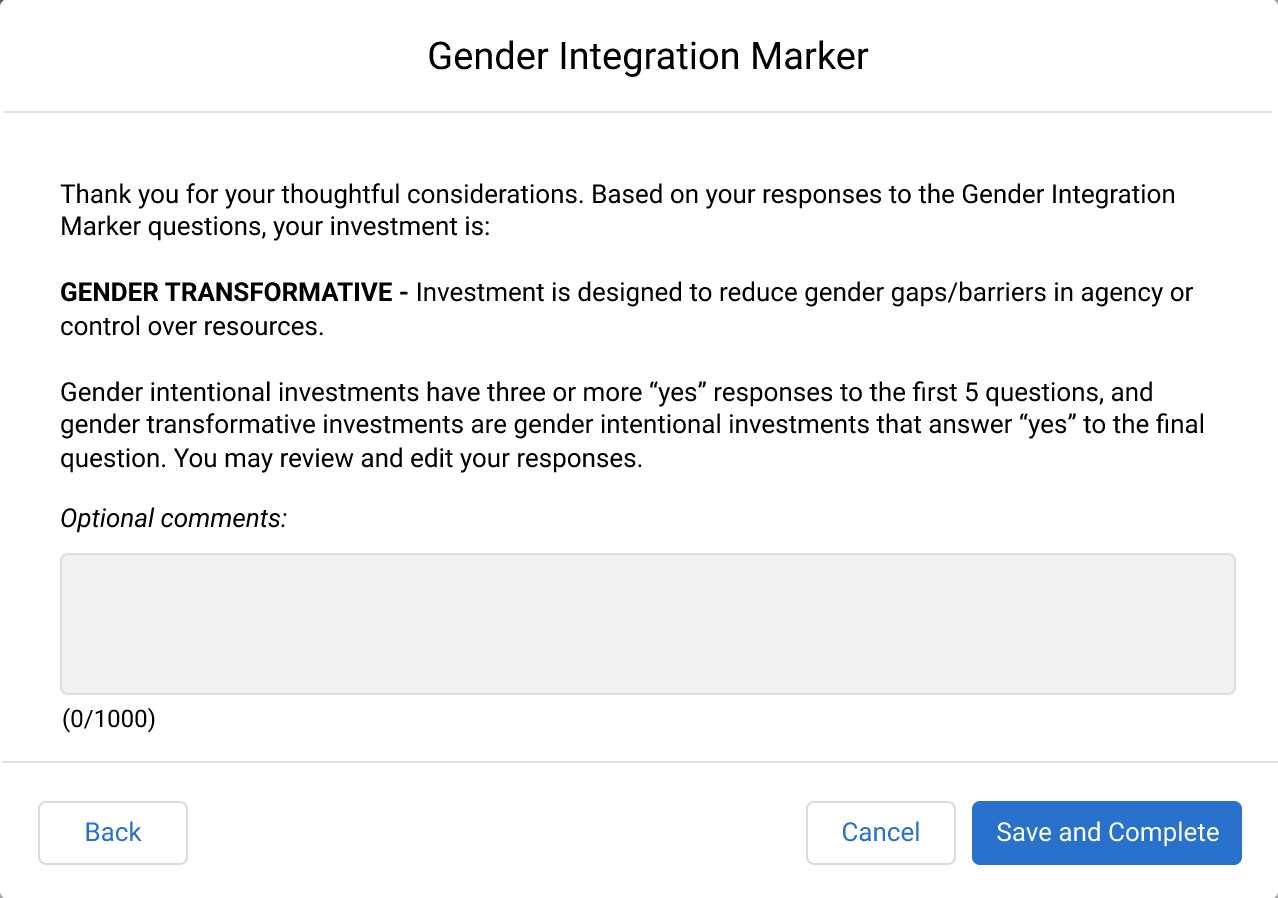
The Gender Integration Marker is how the foundation applies an intersectional gender lens to its investments. Program officers answer six questions about an investment's design. Three or more "yes" answers to the first five make it gender intentional; a "yes" to the sixth as well makes it gender transformative.
The marker lived as a PDF form, used when a concept starts and again when a proposal is refined. Staff asked to capture it digitally inside INVEST, the foundation's investment management software, connected to business intelligence systems so the results could be analyzed and reused.
Research
As lead researcher, I held focus groups with three user groups and interviewed stakeholders, capturing input in Mural and Excel. Affinity analysis turned that input into the key functional requirements for the software team.
The clearest finding: advocacy and R&D teams needed guidance written for their kinds of investments, so they could track how gender-integrated each of their projects was. The default examples didn't fit their work.
One marker, guidance that fits the investment
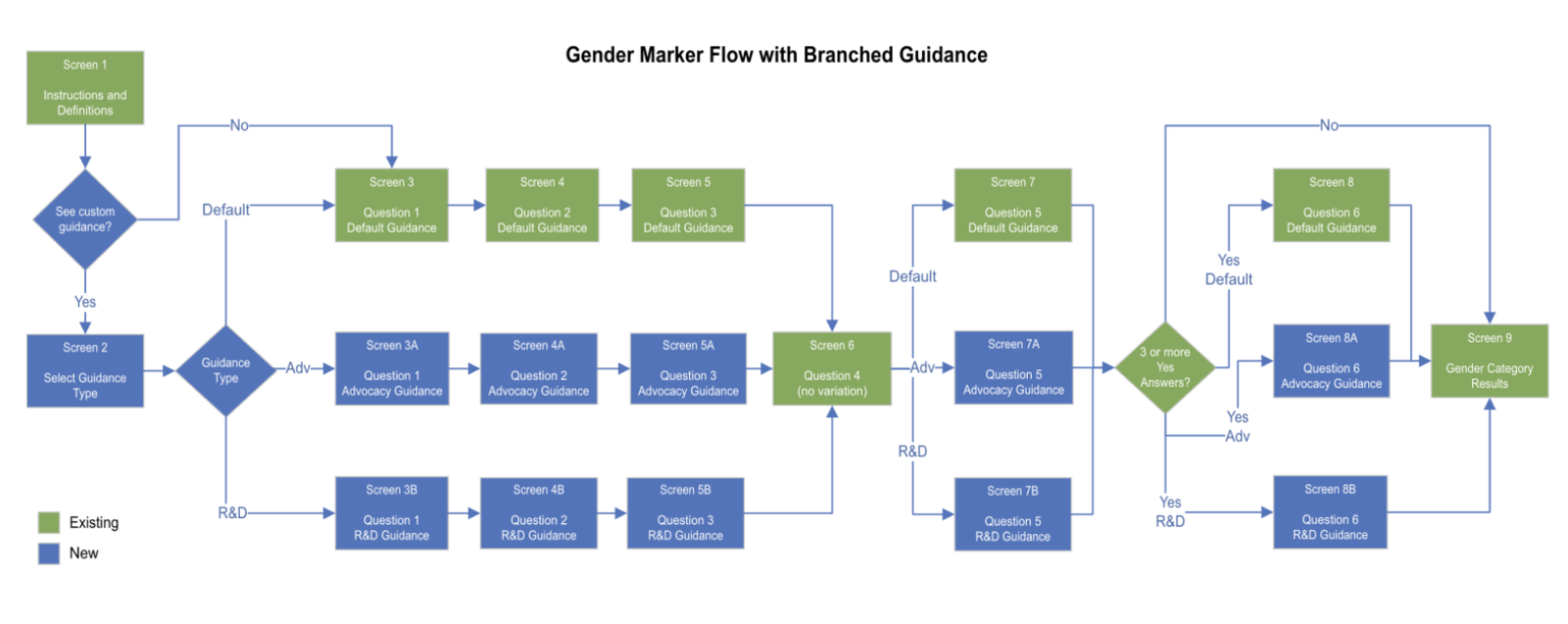
The same six questions, with guidance tailored to advocacy and to product development and research investments, alongside the default.
I mapped every branch as one system flow before designing any screen, marking what already existed and what was new. The logic, including the scoring rule, was agreed in one view before UI work began.
The integrated marker
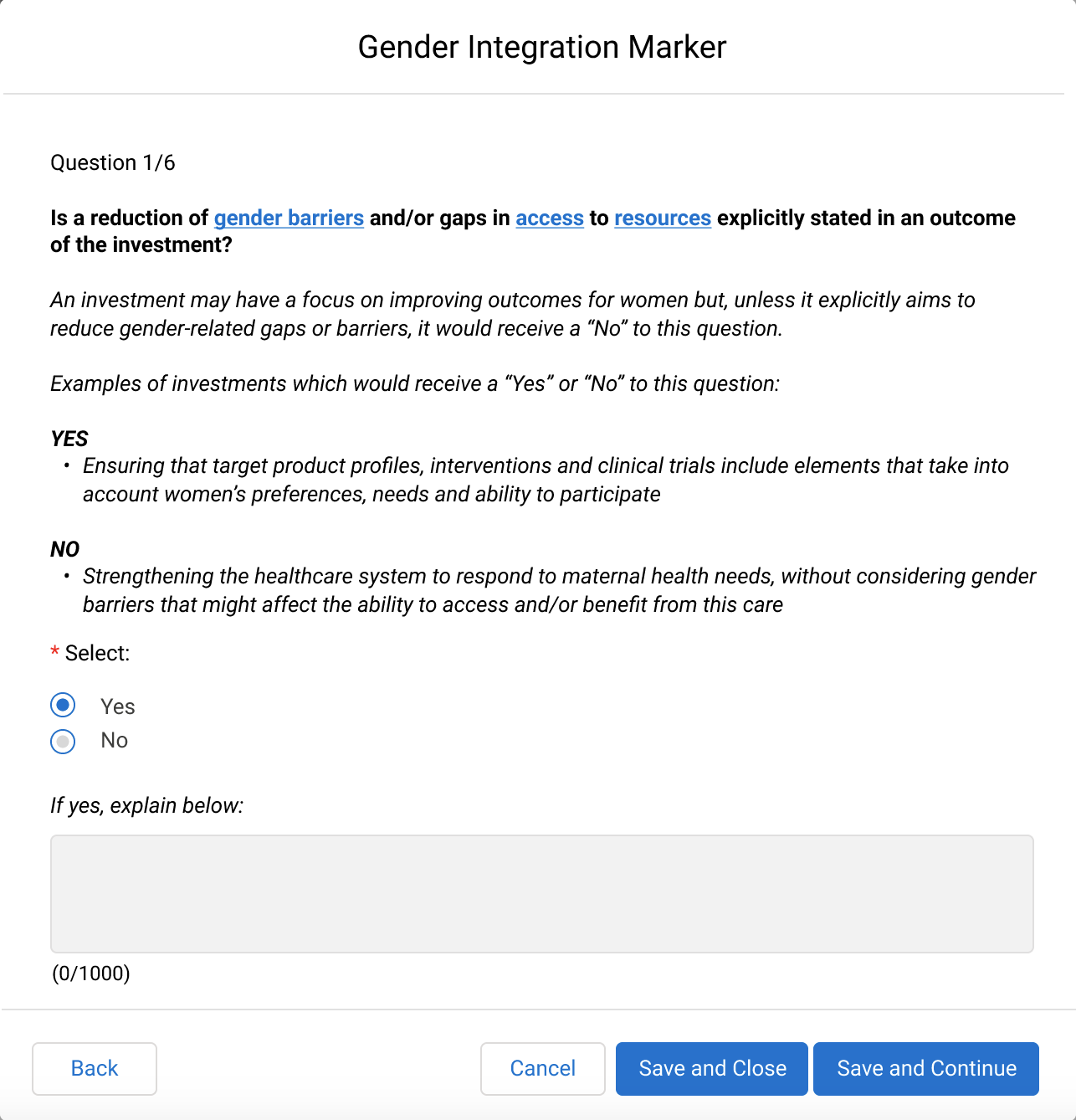
Each question carries plain-language guidance and yes-and-no examples, so program officers can answer consistently without leaving the system.
Testing in sprints
At Gates, I worked inside Agile software teams, with research and design tracked in Jira alongside development. Usability testing happened during the build, not after it.
One example from the same system: in September 2023, I tested a new transparency reporting feature in INVEST with six reviewers from across the foundation, from policy and advocacy to the Africa offices. They worked through a scripted set of real tasks on the minimum viable product while I observed.
| Finding | What we did |
|---|---|
| 6 of 6 reviewers tried list view search to find records, and none succeeded. | A richer list view search went into development, with training on global search in the meantime. |
| 5 of 6 didn't know how to clone a list view. | Pre-built list views for reviewers went into development, plus a short training. |
| 4 of 6 searched by Investment ID before the new record ID. | Removed the extra ID and made Investment ID the search key. Resolved. |
| Reviewers couldn't see every Sustainable Development Goal in the list. | UI fix prioritized in the next sprint. Resolved. |
Average sentiment: 7.6 out of 10, a strong signal for a first release.
I also recommended a visual job aid, because linking the two new data types was abstract even for experts.
Outcome
The integrated marker shipped in INVEST. It is now used on every project the Gates Foundation funds, helping ensure each investment aligns with the foundation's strategic goals on gender.