The argument
Accessibility standards are where inclusion starts, not where it ends. Designers also decide who carries a system's benefits and who carries its burdens.
The session borrows Kat Holmes's distinction: accessibility is an attribute of a product, while inclusive design is a method. Design justice widens that method to ask who takes part in design decisions in the first place.
How the session runs
- Frame. Inclusive design covers disability and the wider range of human difference, such as location, language, education and age. Limitations can be permanent, temporary or situational, and the "average user" does not exist.
- Practice. Eight design tactics grounded in WCAG 2.1 AA: contrast, touch targets, readable type, plain calls to action, useful alt text, more than one cue for primary actions, clear navigation and progress, and errors that say how to fix them.
- Shift the lens. Design justice: a fairer distribution of design's benefits and burdens, and more meaningful participation in design decisions.
- Discuss. Participants talk through their own experience of social movements and technology, and the stories the industry tells about who builds it.
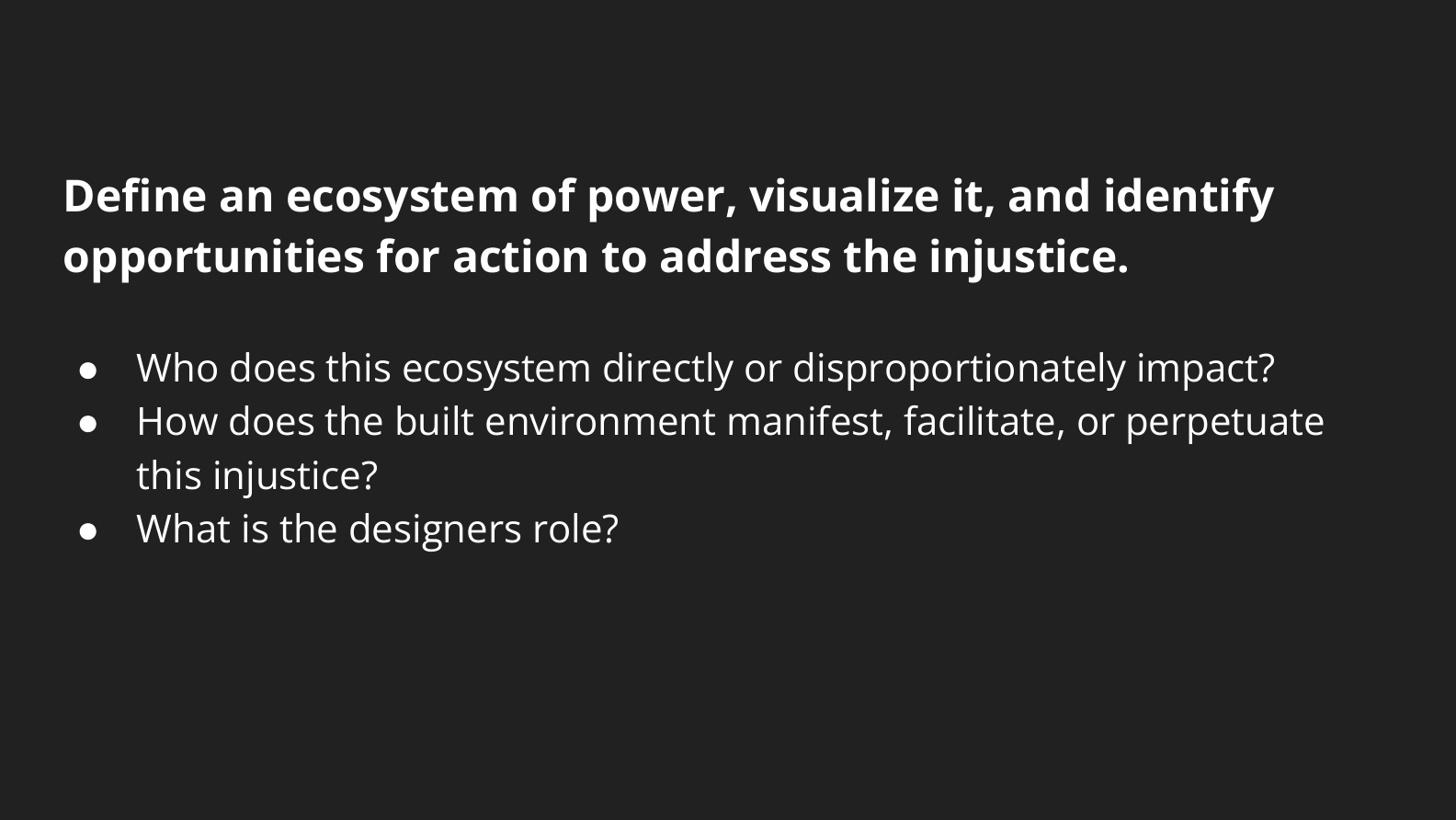
- Map. Small groups define an ecosystem of power, draw it, and identify who it affects most, how the built environment sustains it, and where designers can act.
- Commit. Each person writes down a few ways to bring a design justice lens into their own practice. Ideas are beginnings, not final solutions.